Mishandling garments
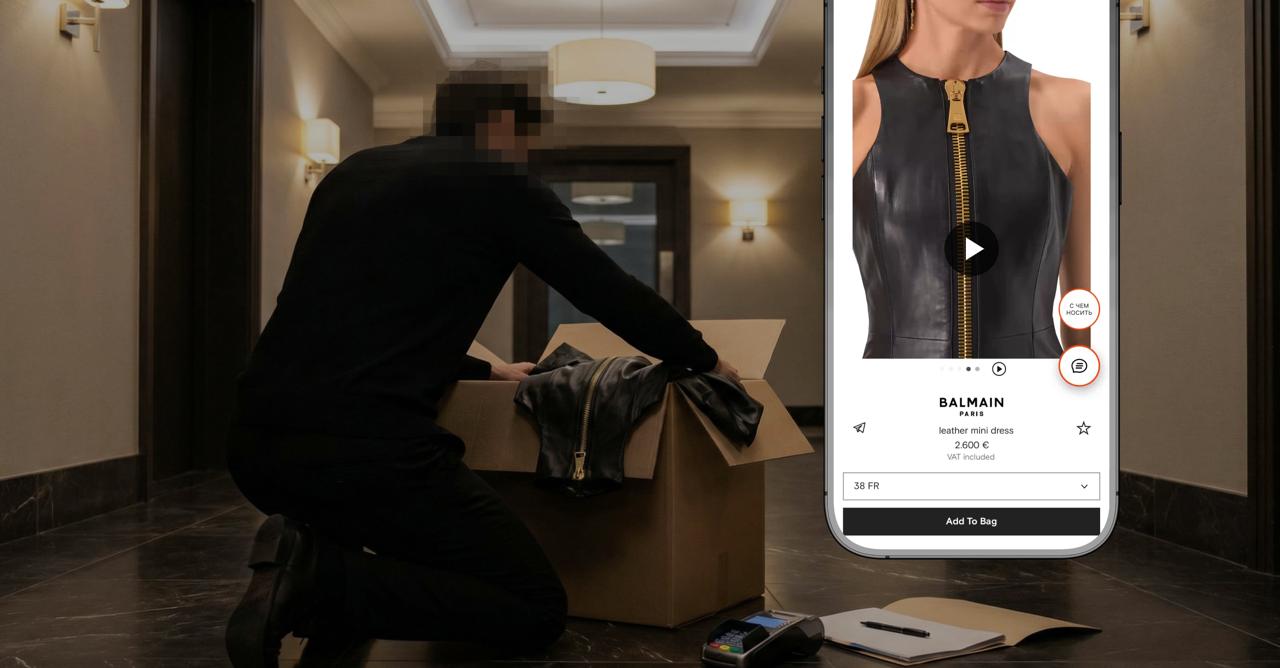
After fittings, some couriers crumpled dresses and suits straight back into delivery boxes instead of rehanging them. The creased-dress mystery, solved on day one.
Case 01 · Ethnographic Research
What a €2,000 dress, a home delivery with fitting, and three days undercover on the road revealed about luxury service — and why none of it ever showed up in the dashboards.
The Platform
The product was a famous department store's luxury platform — Bottega Veneta, Gucci, Saint Laurent, Lanvin, Celine, Dolce & Gabbana, Alexander McQueen — across web and app. Its customers expected premium shopping, not a transaction. They expected the boutique to follow the product all the way home.
One service made that promise literal: home delivery with fitting. A courier arrived with a curated selection, the customer tried pieces on, and kept only what they loved. The delivery wasn't logistics — it was the final, most personal chapter of the brand experience.

The Signal
↑
Returns after fitting
Pieces came back at a rising rate once customers had tried them at home.
↑
Delivery complaints
Grumbles about the delivery experience kept climbing, month over month.
↓
Repeat purchases
The most valuable behaviour — coming back — was quietly slipping.
The misdiagnosis
Internally, the assumption was that customers were at fault — that pieces came back creased and damaged because clients had been careless during their home fittings.
They weren't. Garments left the shop immaculate and returned in poor shape not from any customer mistreatment, but from a lack of care on the couriers' side: instead of being returned to their hangers, items were folded and thrown back into delivery boxes. For a luxury house — where every piece has to look and feel impeccable — that careless handling quietly turned sellable inventory into waste.
The company was investigating its own customers. The problem had been on its own side of the door the whole time.
And yet customers were strangely vague. When asked, they offered feelings, not facts:
Politeness bias
People rarely criticise a service worker to their face. The honest feedback never reached the form.
Service invisibility
The failures happened between the steps the system could see — how garments were repacked, transported and prioritised. Invisible to every metric.
"Nobody complained directly — so the real problem stayed invisible."

The Approach
Dashboards and questionnaires had been exhausted. So — under the guise of new recruits — the researcher and product managers signed on as delivery trainees and went out on the road with the daily couriers, shadowing the full delivery cycle from the inside, where behaviour is unguarded.
Product managers became couriers — arguably the only time they delivered value to a customer in person.
The Findings
None of it appeared in analytics or surveys — because it lived in the gaps between the steps the system tracked.
After fittings, some couriers crumpled dresses and suits straight back into delivery boxes instead of rehanging them. The creased-dress mystery, solved on day one.
Tone drifted informal, fittings felt rushed, and customer questions were sometimes met with dismissive answers — far from the boutique standard.
Toward the end of shifts, distant deliveries were quietly postponed to avoid long trips — pushing the customer's promised window without anyone deciding to.
Despite a strict no-tipping policy, cash tips were being accepted — a small breach that quietly reshaped the service relationship.
The Insight
The problem was never logistics.
It was behavioural service quality.
When a €2,000 dress arrives creased, the customer doesn't think "bad courier." They think "maybe someone already wore this." Perceived luxury collapses, the piece suddenly feels second-hand, and rejection follows. Luxury delivery isn't transport — it's an extension of the brand.
The Response
The findings reframed the work. The fix wasn't a new feature — it was rebuilding the human layer of the delivery, end to end.
Recruit for hospitality and retail backgrounds, and for genuine service-communication skill — not just a driving licence.
Training in garment-handling standards, fitting etiquette, communication scripts and the brand's service principles.
Garment-condition checks after every fitting, mandatory rehanging, route-transparency monitoring and stricter policy enforcement.
The Results
35%
drop in delivery-related complaints
65%
fewer garment-damage incidents after home fittings
+14%
delivery-experience CSAT
The Takeaway
Some problems never surface in analytics, surveys or support tickets — because behaviour changes the moment people know they're being watched.
AI can plan, analyse and synthesise research faster than ever. But it still can't stand in a marble hallway and watch a courier fold a €2,000 dress into a box — and realise this is the real problem. Sometimes the most valuable insight appears the moment you step outside the dashboard and look at reality.