System vs. physical status gap
An item could be physically accepted, but the system update happened hours later. The customer saw nothing change — and assumed the worst.
Case 02 · Ethnographic Research
A luxury resale platform was scaling fast — until growth broke support. The data showed where consignors panicked. Field research at the drop-off desk explained why.
The Platform
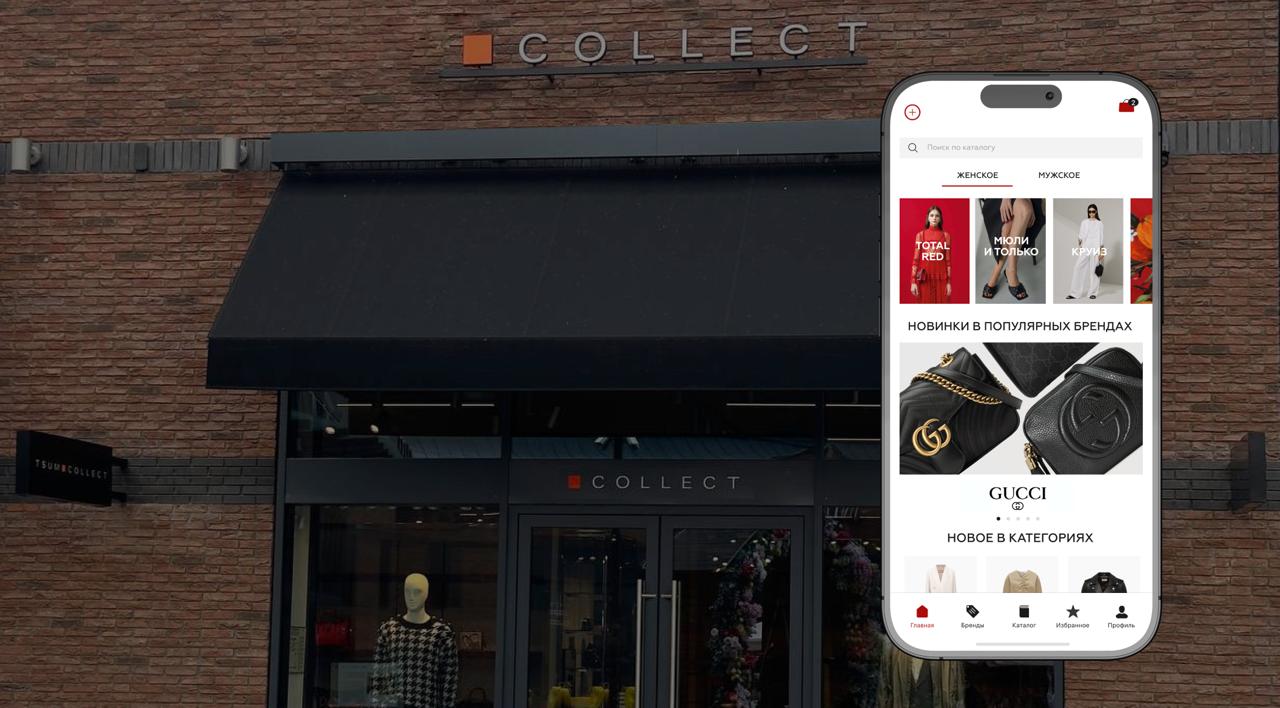
TSUM Collect lets people shop authenticated luxury goods or sell their own pre-loved pieces — resale being the most genuinely sustainable way to love fashion. The consignor journey drew on the best of the category: Farfetch Second Life, Vestiaire Collective, The RealReal and OSKELLY.
Every item is hand-checked by a specialist to guarantee authenticity, then moved to a professional photoshoot before being showcased — online and at physical corners across several offline locations. The whole promise rests on one thing: that a stranger will look after something valuable as carefully as you would.
The Break
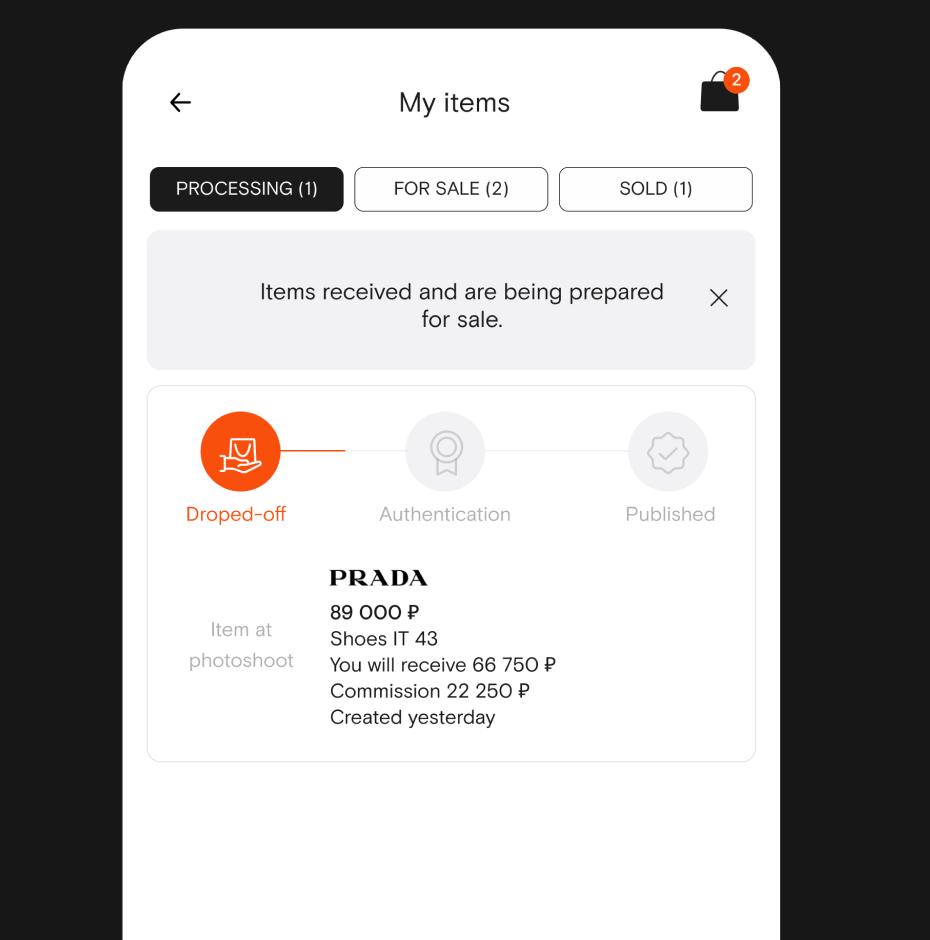
The platform grew fast, month after month — which sounds great, until growth breaks something. Here, it broke customer support. The journey already had clear statuses: Drop-off → Authentication → Published.
But operationally the seams showed: support queues overloaded, response times climbed, backlogs grew, and items waited to be listed. And consignors began contacting support constantly with one deceptively simple question.
"What is happening with my item?"
The First Hypothesis
The team's first instinct was friction at the intake points — the usual suspects:
Incorrect labelling
Items mis-tagged somewhere between desk and warehouse.
Transfer delays
Slow hand-offs moving goods to the authentication centre.
Human error
Ordinary operational mistakes under a rising load.
So we asked the data two questions: where do support contacts spike, and which personas and stages generate the most friction? The signal was clear — most requests landed right after the drop-off stage. That told us where to look. It didn't tell us why.
The Approach
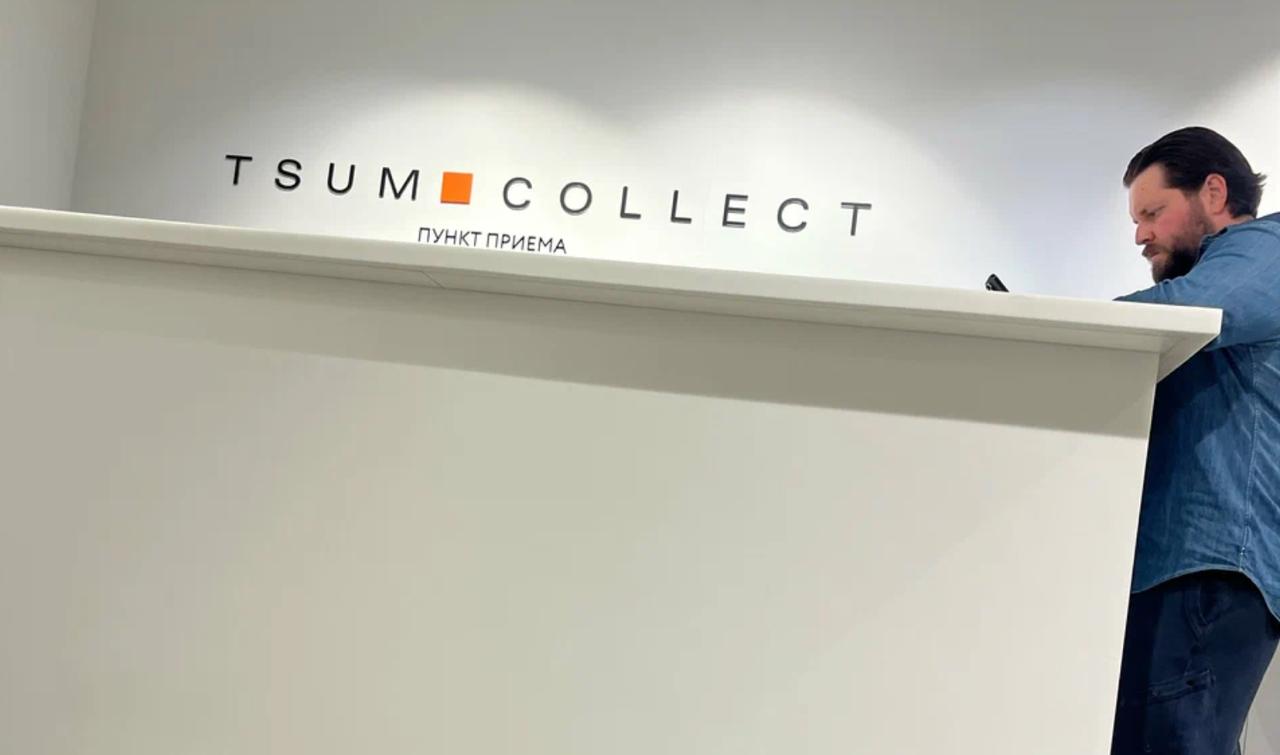
Analytics had pointed at the moment of drop-off, so that's where we went. We embedded at the intake points, watched the hand-off happen, and listened to consignors at the exact instant they parted with something precious.
Shadowing intake staff and documenting every artefact — labels, packaging, receipts.
The Findings
The field surfaced genuine issues. Each one was real. None of them, on its own, explained the sheer scale of the anxiety.
An item could be physically accepted, but the system update happened hours later. The customer saw nothing change — and assumed the worst.
One employee said authentication takes "1–2 days." Another said "up to a week." Same process, two answers — and zero confidence.
Temporary barcode stickers were sometimes stuck to dust bags before being replaced. To the owner of a €2,000 piece, it looked makeshift and risky.
Staff sometimes simply forgot to say what happens next, or when the next update would appear — leaving a silence the customer filled with worry.
The Insight
The problem wasn't the intake process.
It was post-drop-off anxiety.
The moment a customer hands over a valuable item and walks away, they lose physical control of it. For luxury goods worth thousands, that creates real psychological tension. The operational issues were genuine — but the true issue was perception and trust.
At the desk, consignors weren't asking operational questions — they were asking control questions
Consignors didn't need more status updates. They needed reassurance and guided transparency.
The Response
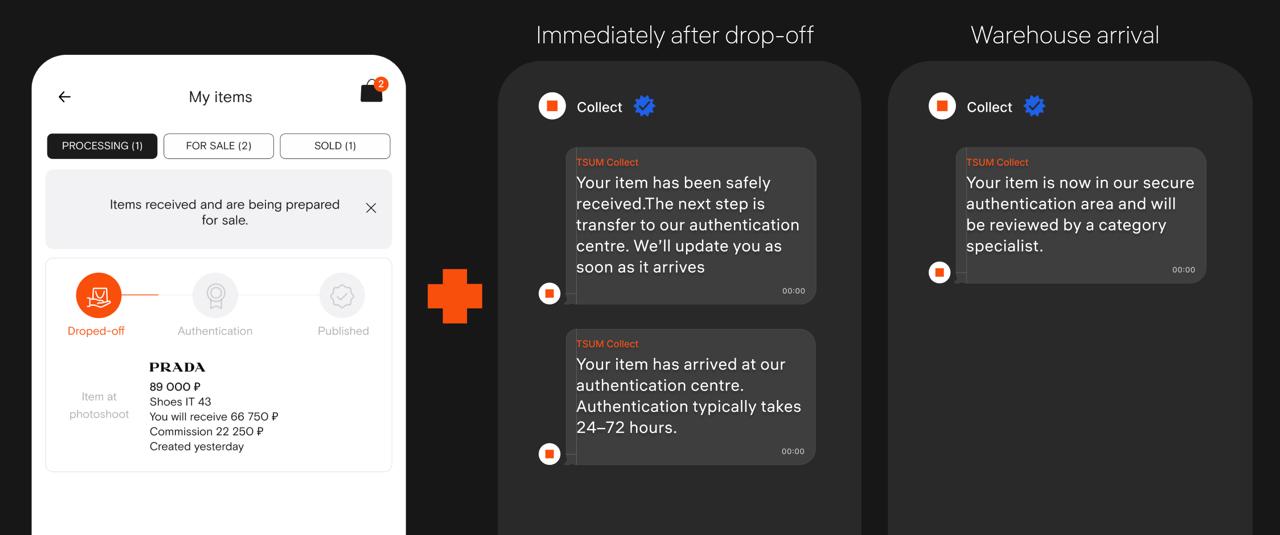
Instead of adding more system statuses, we redesigned the communication layer — turning flat events into rich, conversational touchpoints.
Every step now says what just happened, what comes next, and the expected timing — not just a label.
Customers are told about possible outcomes before they have a chance to worry about them.
Calm, transparent and reassuring — never robotic, never transactional. The voice of a concierge, not a tracking page.
The Results
<2 min
support response time, down from hours
40%
of support interactions moved to messaging
+11%
consignor CSAT
The Takeaway
Analytics showed where the problem occurred — a spike right after drop-off. Ethnography explained why it happened: people losing control of something precious, and filling the silence with fear.
The solution was never another status update. It was a trust layer, built through communication. Ethnography revealed the gap that data alone could not see.